The major failing in management and, indeed, life is the obsession with finding the right answer rather than the right question. There is nothing worse than the sudden realisation that you have wasted all that time, effort and resource chasing the right answer to the wrong question?
If you’ve ever sat in a meeting where someone shares a problem and the room instantly fills with advice, you’ll recognise this pattern:
‘Have you tried…?’
‘What you should do is…’
‘When I had that issue, I…’
It’s well-meaning. It’s fast. Potentially there’s even a helpful nugget in there but it often misses the point.
The Decision Lab takes a different approach. Action Learning
So What Is Action Learning?
Instead of jumping in with solutions, it slows the process down. It replaces advice with questions. It turns problem-solving into a shared, reflective practice. Coaching from the group, many heads…and that changes everything.
It’s not abstract. It’s grounded in real, messy, day-to-day problems. The kind that keep people awake at night. The kind that sit awkwardly in the background of a working week.
Each person brings a real issue. Something unresolved. Something important. They refine their coaching skills, how to ask the right question.
The group’s job isn’t to solve it for them. The group’s job is to ask better questions.
Why Questions Matter More Than Advice
The uncomfortable truth is …advice often reflects the giver more than the receiver.
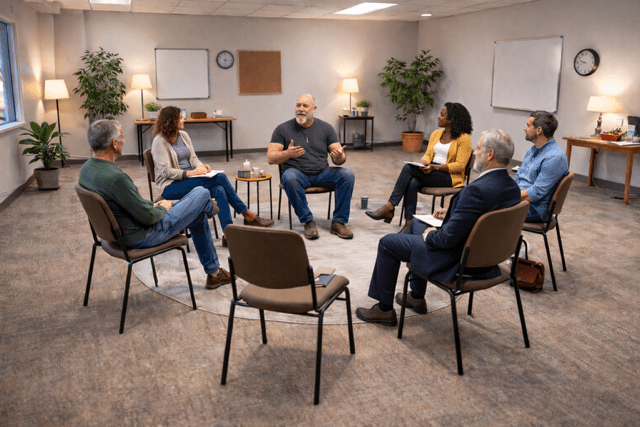
With eight people in a room, someone presenting an issue could easily receive seven different pieces of advice each shaped by someone else’s context, experience, and assumptions. Some might help. Many won’t quite fit. But when the group asks thoughtful, well-placed questions, something else happens. The person with the issue starts to rethink how they’re framing it. They notice assumptions. They see blind spots. They see options they hadn’t considered. Crucially the solutions come from them.
That’s the goal.
Not borrowed solutions but insight owned.
Over time, something interesting happens.
The person presenting learns and grows, but so does everyone else.
Listening to others’ dilemmas becomes a mirror. Group members start noticing their own patterns in someone else’s story. They practise coaching skills. They become more comfortable with silence. With uncertainty. With not rushing to fix.
The learning multiplies.
It’s Harder Than It Sounds
Newcomers often struggle with one thing, not giving advice. The instinct to fix is strong especially around senior leaders – doers
But action learning requires restraint. It requires trust in the process. It assumes that most people already hold the raw material of their own solutions, they just need space and challenge to uncover it.
When that shift happens, from fixing to facilitating thinking, something powerful emerges.
It builds leaders who can sit with ambiguity. Who ask before they tell. Who understand that perspective shapes possibility.
They build confidence in their own reasoning.
They become more reflective leaders.
Action + Reflection = Development
Action learning isn’t therapy. It’s not mentoring. And it’s not group brainstorming.
It’s development through disciplined reflection.
The ‘action’ part matters. Each person leaves with something to try, an experiment, a conversation, a shift in approach. They return next time having acted and reflected.
It’s a question that makes them see their world differently.
The cycle continues.
Over six or seven sessions, you don’t just solve problems. You change how you think about problems.
That’s a deeper kind of growth.
If you want to know more or book a place, simply get in touch with Owen Whitehouse via email — click here.